
Trauma: understanding → awareness → hope → reflection.
This is where the journey begins. Get to know how trauma impacts the mind, body, and spirit.
Through education and reflection, you'll gain clarity, compassion, and tools for healing.

What Is Trauma? | What Abuse Actually Looks Like
Trauma is not simply the difficult event itself—it is the lasting impact that overwhelming experiences leave on the mind, body, and spirit.
While many people associate trauma only with physical violence, it can also develop through emotional abuse, neglect, manipulation, abandonment, chronic criticism, betrayal, financial control, or growing up in an environment where safety and love were inconsistent.
Because trauma often becomes “normal” to those living through it, many people never recognize that what they experienced was abuse. Understanding what trauma truly is is often the first step toward healing, because what remains hidden cannot be restored.
At Higher Calling Empowerment, we believe awareness is not about assigning blame—it is about recognizing the wounds so they can finally begin to heal.
"Beloved, do not believe every spirit, but test the spirits to see whether they are from God."
1 John 4:1
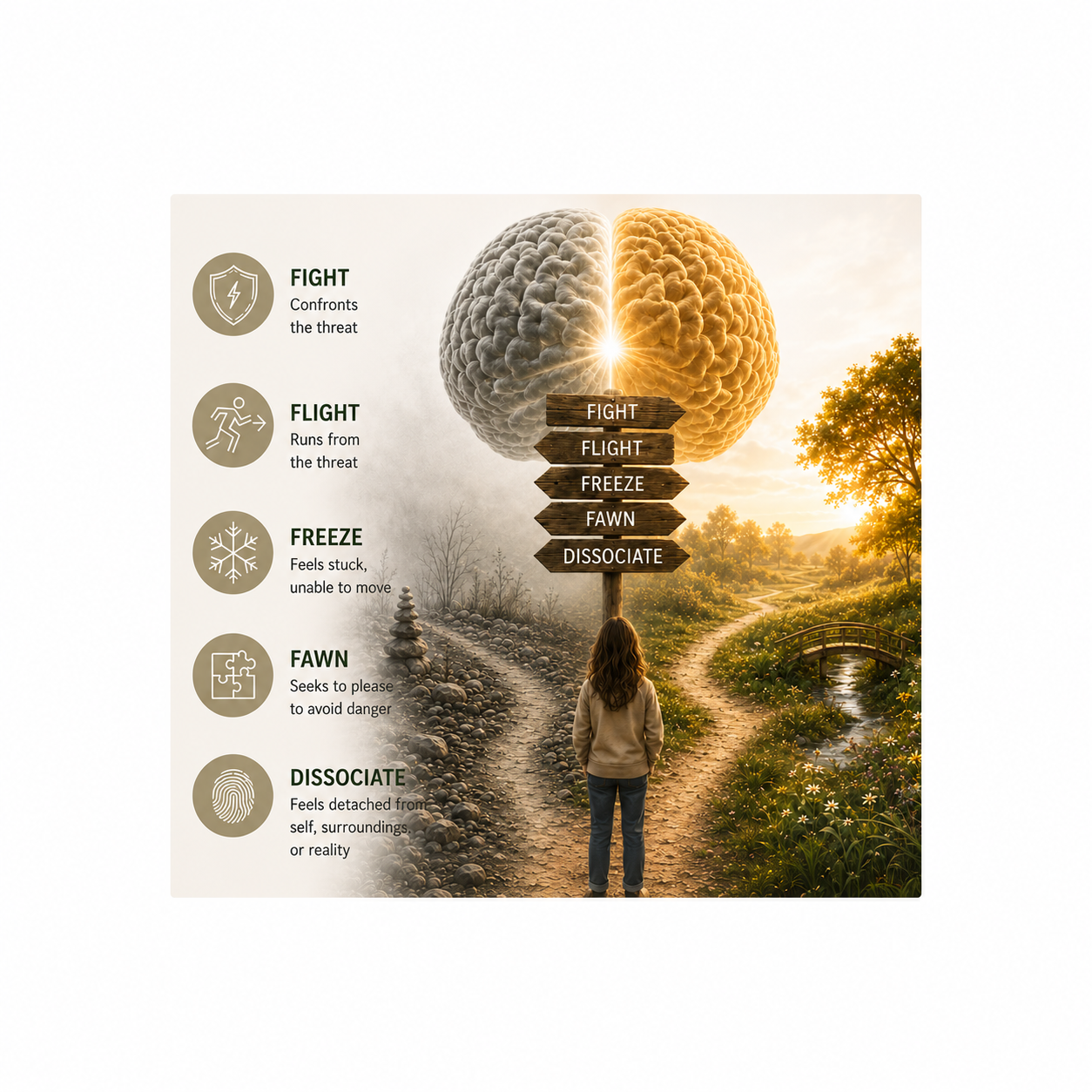
How Trauma Changes the Brain | Trauma Responses
Trauma affects far more than emotions—it reshapes how the brain perceives safety, relationships, and everyday life. When the brain experiences overwhelming stress, it shifts into survival mode, prioritizing protection over peace. As a result, people may react automatically without understanding why.
Some become confrontational (fight), others avoid conflict or run from difficult situations (flight), while others feel emotionally or physically “stuck” (freeze). Some learn to survive by constantly pleasing others, ignoring their own needs to maintain safety (fawn).
Others experience dissociation, feeling detached from their emotions, surroundings, or even their own identity as the brain attempts to shield them from overwhelming pain.
These responses are not character flaws—they are survival strategies that once served a purpose. The encouraging truth is that through intentional healing, renewed thinking, and God’s restoring work, these patterns can gradually be replaced with healthier ways of living.
Romans 12:2
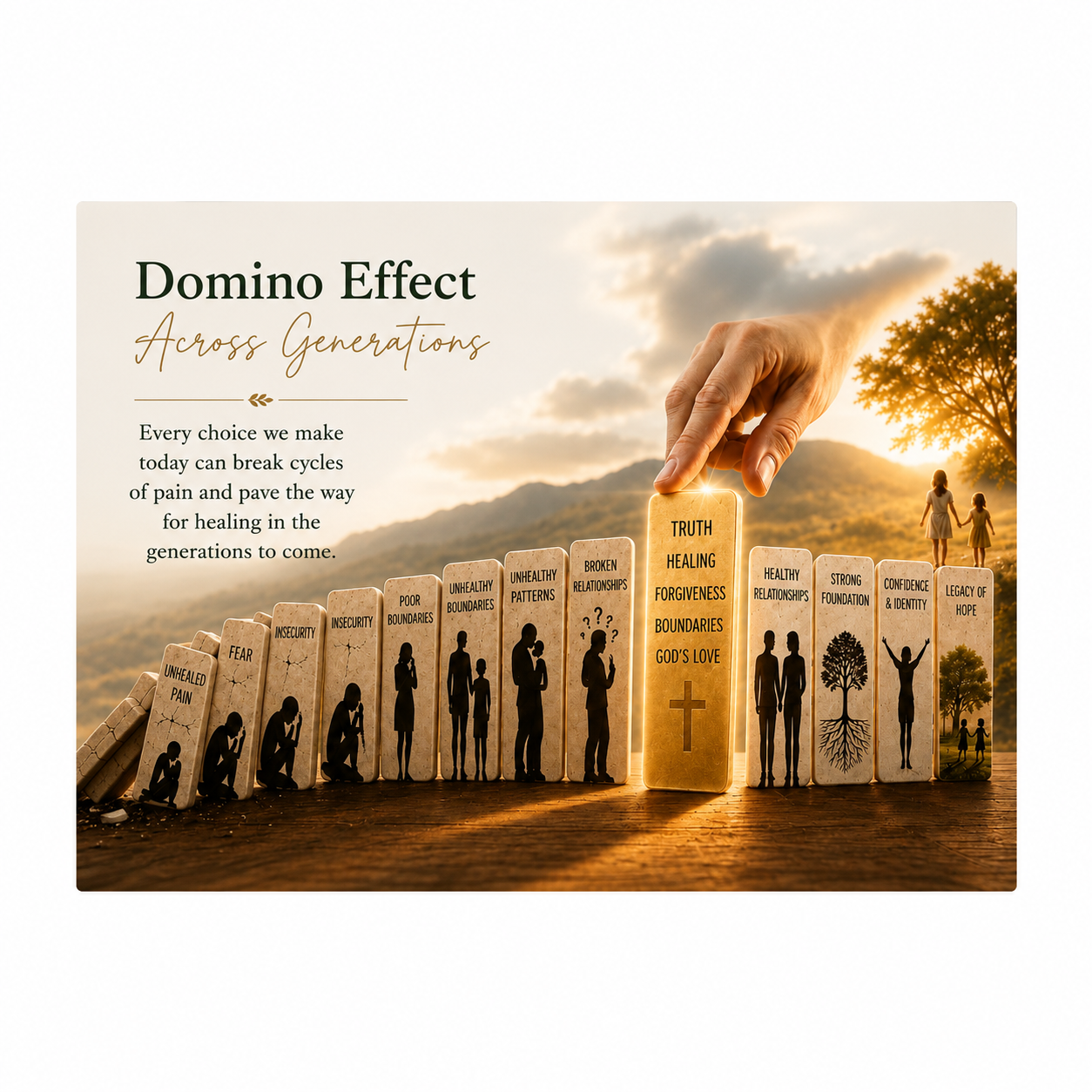
Long-Term Effects of Trauma
When trauma remains unaddressed, its effects often extend far beyond the original experience. It can influence relationships, parenting, self-worth, decision-making, physical health, finances, career success, and one’s relationship with God.
Many individuals struggle with chronic anxiety, depression, perfectionism, people-pleasing, emotional numbness, trust issues, or unhealthy coping mechanisms without realizing these behaviors may be rooted in past wounds.
Left untreated, trauma can continue across generations, influencing families in ways that are often unseen. Yet healing is possible.
Through truth, intentional support, healthy relationships, and God’s transforming power, cycles that have existed for years can be broken, allowing individuals and families to move toward lasting restoration.
“The soul who sins shall die. The son shall not suffer for the iniquity of the father, nor the father suffer for the iniquity of the son. The righteousness of the righteous shall be upon himself, and the wickedness of the wicked shall be upon himself.”
Ezekiel 18:20

What Scripture Says About Healing
God never minimizes pain, nor does He abandon those who are wounded.
Throughout Scripture, He consistently reveals Himself as a refuge for the brokenhearted, a source of wisdom for the confused, and a healer for those carrying deep emotional wounds. While healing may be a journey rather than a single moment, God’s desire is always restoration—not merely survival.
As we renew our minds through His truth, invite Him into our broken places, and walk in community, we begin to experience the peace, freedom, and identity He intended for us.
Our hope is not simply in overcoming trauma but in becoming transformed through Christ.
"He heals the brokenhearted and binds up their wounds.”
-Psalm 147:3
“I will restore to you the years that the swarming locust has eaten."
-Joel 2:25
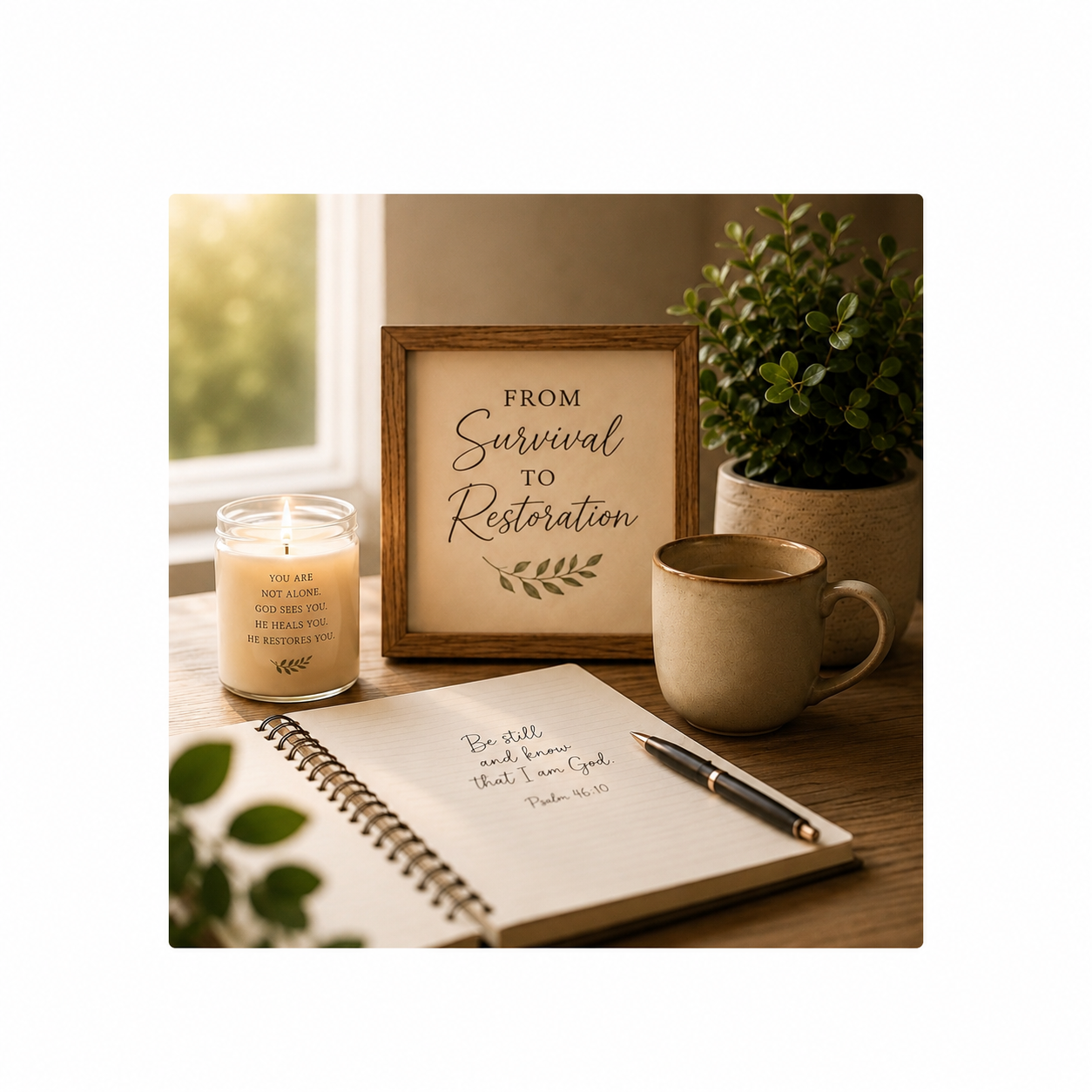
Reflection Questions
Healing often begins with honest reflection.
As you move through this information, take time to prayerfully consider your own experiences without judgment or shame.
Have there been moments in your life that still influence how you think, react, or relate to others today?
Do you notice patterns of fear, avoidance, people-pleasing, anger, or emotional numbness that may have developed as ways to survive?
What would it look like to invite God into those places and begin exchanging survival for restoration?
Wherever you find yourself on your journey, remember that acknowledging your wounds is not a sign of weakness—it is often the first courageous step toward healing.
Healing begins with one honest step.
If today’s information helped you recognize patterns in your own life, know that you don’t have to walk this journey alone. At Higher Calling Empowerment, we share Christ-centered educational videos, biblical encouragement, and practical tools to help you better understand trauma, healing, and personal growth through God’s truth.
Follow us on TikTok for ongoing encouragement and resources designed to support your journey toward lasting restoration of the mind, body, and spirit—one honest step at a time.